
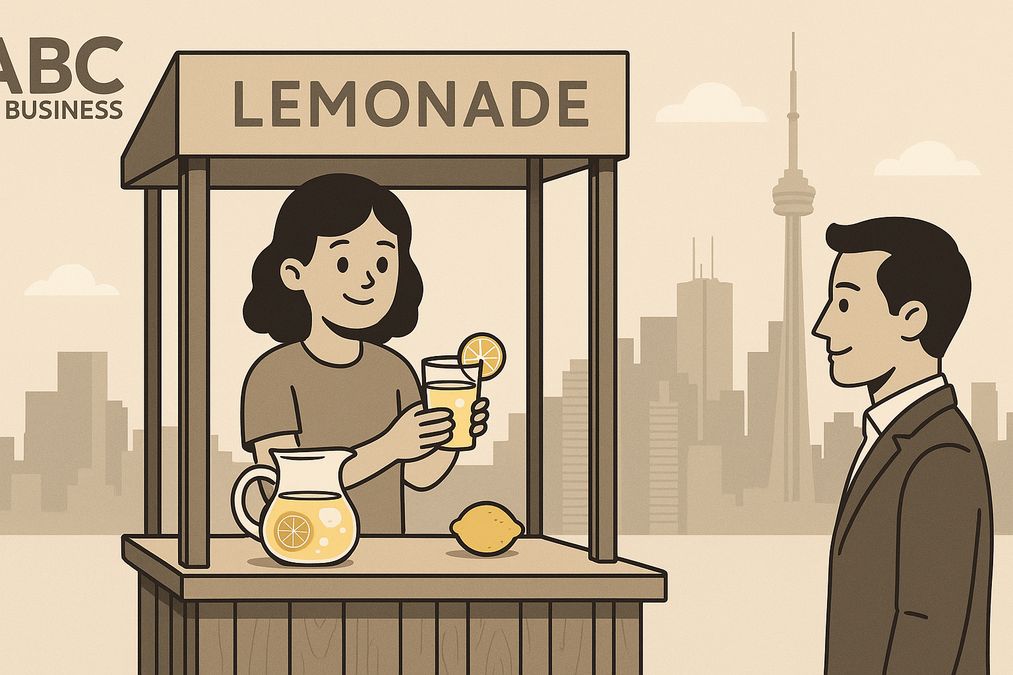
If you grew up in Toronto, you probably passed a few lemonade stands on summer walks through your neighbourhood. Those tiny pop-up businesses may look simple, but their history holds big clues about what works (and what fails) in the real world of entrepreneurship—especially in 2026. In this guide, we use lemonade stand history to unpack practical business lessons for Toronto entrepreneurs. Whether you’re launching your first venture or scaling a small startup, you’ll find clear steps, modern tools, and local insights you can apply today.
Why the History of Lemonade Stands Still Matters in 2026
For more than a century, lemonade stands have represented the most accessible way to turn an idea into income. They’re stripped-down businesses: a simple product, a visible location, fast feedback, and word-of-mouth marketing. That simplicity is exactly why their lessons translate so well to Toronto’s startup scene today. Even with AI, e-commerce, and complex funding markets, the fundamentals are timeless: find a need, design a small offer, test it fast, learn from customers, and then scale confidently.
Toronto in 2026 is an ideal lab for this approach. The city is dense, diverse, and digitally connected. From Bloor West Village and the Danforth to Scarborough and North York, each area offers different customer profiles, price sensitivities, and buying habits. The same “tiny experiment, fast learning” logic that powers lemonade stands can de-risk your next product launch in these varied micro-markets.
lemonade stand history business lessons for Toronto entrepreneurs
Below are the core takeaways inspired by lemonade stand history and reimagined for modern founders in Toronto.
1) Start Small, Learn Fast
Lemonade stands don’t overbuild. They start with the basics and open quickly. For your business, think in experiments, not empires. Launch a minimum viable offer—the simplest version that delivers value. Measure interest with a preorder page, a small pilot, or a weekend pop-up at a local market. Gather real data before investing heavily.
Local tip: Test in places with steady foot traffic and diverse audiences—street festivals, farmers’ markets, or near TTC stations like Union, Wellesley, or Finch. If you’re online-first, use a landing page and low-cost ads to Toronto audiences and see who clicks, signs up, or buys.
2) Know the Rules Before You Sell
Every classic lemonade stand eventually runs into rules: where you can set up, what you can sell, and whether you need permits. The adult version is more complex. Toronto businesses often require registrations, tax setup (HST), signage approvals, and sometimes food safety compliance if you sell consumables. When in doubt, verify with the City of Toronto and Ontario guidelines. It’s easier to launch confidently when compliance is clear.
3) Choose Locations the Way a Street Vendor Would
Lemonade stands thrive near parades, parks, and playgrounds. Translation for 2026: go where your customers already gather—digitally and physically. If you’re retail, consider Business Improvement Areas (BIAs) with strong community support like Queen Street West, Roncesvalles, or The Beaches. If you’re B2B, network near where your buyers meet—coworking hubs, industry meetups, and LinkedIn groups for Toronto professionals.
4) Build a Brand, Not Just a Booth
Classic stands often feature bright signs and friendly service. Those signals build trust and attract customers. Your brand should do the same: be clear, kind, and consistent. Choose a memorable name, keep visuals cohesive, and make your story obvious. People buy from people, not faceless logos. Share founder stories, your Toronto roots, and the problem you solve in language anyone can understand.
5) Price for Profit (Not Just Popularity)
A kid charging $1 for lemonade learns about costs fast. You should, too. List every cost you’ll face—materials, labour, delivery, software, rent, marketing—and add a healthy margin. Toronto costs can creep up quickly; don’t price for survival, price for sustainability. Know your break-even point, aim for a defensible gross margin, and track cash flow weekly.
6) Make It Easy to Pay
Back then it was a jar of coins. In 2026, people expect tap, mobile wallets, and seamless online checkout. The easier you make it to pay, the more you sell. Offer multiple options and always test your checkout process—from mobile speed to tax calculations and shipping estimates if applicable.
7) Upsell, Cross-sell, and Build Repeat Buyers
A great lemonade stand offers cookies, extra-large cups, or a loyalty punch card. In your business, create bundles, add-ons, subscriptions, or maintenance plans. Build email and SMS lists. Send friendly check-ins and exclusive perks. Toronto is competitive; turning first-time buyers into fans is your growth engine.
8) Systemize So You Can Scale
What begins as a one-person table evolves into a repeatable system: recipe, sign, setup, service, cleanup. Your startup needs the same—documented processes, clear roles, and repeatable campaigns. That’s how you scale without quality slipping. A system turns a good week into a good year.
9) Weather Happens. Build Resilience.
Every stand has a rainy-day story. Your business will too: supply delays, ad costs jumping, a platform update that breaks your site. Plan for volatility with a cash buffer, alternate suppliers, and an “offline” path to selling if your main channel fails for a day or two.
10) Make Every Customer Feel Like a Neighbour
The best stands remember faces and say thanks. You can replicate that warmth at scale with personalization: use first names, recall past orders, and resolve issues with empathy. Toronto buyers appreciate speed and sincerity—own mistakes, fix them fast, and follow up to ensure satisfaction.
Translating Nostalgia into 2026 Toronto Reality
It’s one thing to love the lemonade stand metaphor; it’s another to put it to work in today’s market. Here’s how to adapt those lessons for 2026 in Toronto’s fast-moving, tech-enabled landscape.
Validate with Micro-Experiments
Before you spend, sell. Set up a simple landing page with your offer and a real call to action: buy, pre-order, or join a waitlist. Share it with Toronto-specific communities—local Facebook groups, Reddit threads (check r/askTO and r/toronto), LinkedIn posts, and neighbourhood newsletters. A few dozen qualified responses will teach you more than weeks of theory.
For deeper tactics on low-cost validation, bookmark and read Affordable Business Startups in Toronto Canada 2026: Guide & Resources. It’s packed with city-relevant ways to start lean and smart.
Design a Toronto-Friendly Offer
Lemonade is simple. Your offer should be, too. Focus on one clear outcome customers can feel quickly: “We deliver setup-free bookkeeping for solo contractors,” or “We design one-page websites in 72 hours,” or “We source, roast, and deliver single-origin coffee across the GTA weekly.” Make it obvious, deliver fast, then add complexity only when demand proves it.
Leverage Street-Level and Digital-Level Locations
Combine physical presence with digital visibility. Join artisan markets, partner with local cafes or gyms, and test pop-ups in high-traffic corridors. Online, ensure your Google Business Profile is accurate, your NAP (name, address, phone) is consistent, and your site loads fast on mobile. Local SEO still drives foot traffic, calls, and messages in 2026.
Build Co-founder Strength
Lemonade stands often have siblings or friends sharing the workload. If you and your spouse or partner are co-founders, align roles, rules, and rhythms early. Read Top Tips for Married Couples Running a Business in Toronto for practical ways to protect both your relationship and your revenue.
Embrace the “Unplanned Entrepreneur” Mindset
Plenty of great Toronto businesses start accidentally—after a layoff, a side project, or a sudden market shift. If that’s you, the lemonade model still fits: start small, test, learn, iterate. See Guides for Unplanned Entrepreneurs Starting a Business in 2026 for step-by-step clarity when you didn’t plan to become a founder (but now you are).
Simple Money Math: From Lemonade to LTV
Good stands track cups sold and cash collected. You’ll track a bit more, but the spirit is similar. Keep your math simple and rigorous.
Break-even Basics
First, list your fixed monthly costs: rent (or coworking), software subscriptions, accounting, marketing tools, and baseline labour. Then, list variable costs per unit: materials, packaging, shipping, payment processing. Price your product so that each sale contributes healthy gross profit to cover your fixed costs—and profit remains after that.
Example: If your fixed costs are $3,000/month and your gross profit per sale is $60, you need 50 sales to break even. Everything past that is operating profit—unless you increase marketing spend, which is often a smart move if your economics stay strong.
CAC vs. LTV
In lemonade terms, how much does it cost to get a new customer, and how much will that customer spend with you over time? Keep your cost to acquire customers (CAC) well below your customer lifetime value (LTV). For businesses with repeat orders or subscriptions, LTV should ideally be at least 3x CAC, assuming reasonable margins and churn.
Cash Flow Over Everything
Most stands buy lemons before they sell cups. If you can invert that, do it—take deposits, sell preorders, or run short cycles so you aren’t overinvested in inventory. Offer incentives for early payment and negotiate fair terms with suppliers. Cash buffers help you survive slow weeks and seize fast opportunities.
A 30-Day Toronto Launch Plan Inspired by a Lemonade Stand
Here’s a simple, practical plan you can start this month.
Week 1: Define and Validate
- Clarify your one-sentence value proposition and the problem you solve in Toronto.
- Set up a simple landing page with clear pricing and a single CTA (buy, pre-order, book a call).
- Share it in targeted local communities, collect feedback, and tally interest by channel.
- Pre-sell if possible to validate demand with dollars.
Week 2: Make It Official and Operational
- Register your business structure and set up HST if required.
- Open a business bank account and choose a payment processor.
- Draft a basic operating checklist (fulfillment steps, customer service standards, returns/refund policy).
- Research any permits or certifications you may need for your category.
Week 3: Build the First “Stall”
- Finalize your minimum viable offer and delivery process.
- Create 2–3 core marketing assets: a one-pager, product photos, and a short demo video.
- List on Google Business Profile and relevant directories (with consistent NAP).
- Line up your first dozen prospects from Week 1 to test and refine.
Week 4: Sell, Learn, Improve
- Run a small promo (e.g., “Founding Toronto Customers” deal) to drive first sales and testimonials.
- Measure conversion rates by channel and customer type.
- Fix bottlenecks: payments, shipping times, onboarding emails, or response delays.
- Document what worked, then design your next experiment (bigger audience, new bundle, or subscription add-on).
Helpful Tools and Services for Toronto Founders in 2026
- ABC of Business: Training, workshops, and practical information to help new entrepreneurs, small businesses, and startups create and grow with proven playbooks for the Toronto market.
- City of Toronto Small Business resources: Licensing, permits, and local support programs.
- Digital Main Street: Grants and support for digitizing small businesses.
- Shopify or WooCommerce: Fast e-commerce setup for MVPs and full stores.
- Square or Stripe: Payment processing online and in person.
- Canva: Quick, on-brand visuals for ads, packaging, and social posts.
- Mailchimp, Klaviyo, or ConvertKit: Email and SMS campaigns for retention.
- QuickBooks or Wave: Accounting, invoicing, and tax prep.
- Notion or Trello: SOPs, project tracking, and team collaboration.
- Fiverr or Upwork: On-demand design, copy, and tech help to move faster.
Permits, Legal, and Compliance: Don’t Skip the Boring Stuff
Lemonade stands rarely file paperwork—but you should. Toronto has clear rules to protect consumers and businesses. Check the latest requirements for:
- Business registration and HST setup based on revenue thresholds.
- Zoning rules and signage permissions if you have a physical location or pop-ups.
- Food safety and health inspections if you sell consumables (review Toronto Public Health guidelines).
- AODA accessibility standards for customer-facing spaces and websites.
- WSIB coverage if you hire staff, plus basic employment standards.
- Privacy and data protection if you collect customer information online.
Document your policies plainly. Customers appreciate clarity on delivery timelines, returns, warranties, and data privacy. Good compliance is a trust signal—and trust converts.
Marketing the “Stand” in 2026: A Simple Playbook
Own Your Home Base
Publish a fast, mobile-first website with your core offer, pricing, FAQs, and a clear CTA. Add a booking link or checkout button. Install analytics to track where visitors come from and what they do.
Be Findable Locally
- Complete your Google Business Profile with service areas around the GTA.
- Use consistent NAP across listings (website footer, social profiles, directories).
- Ask early customers for honest reviews—respond to each one personally.
Tell Stories That Travel
Share short, authentic stories that fit the city’s rhythm: a 30-second behind-the-scenes reel, a quick “first customer” snapshot, or a carousel of tips for Toronto buyers. Focus on specific outcomes you’ve delivered and the neighbourhoods you’ve served.
Turn Buyers into Believers
Create lightweight loyalty: a quarterly check-in email, a referral bonus, or an exclusive product drop for repeat customers. The most profitable “ads” you’ll ever run are the ones your existing customers post voluntarily.
Funding and Affordability: Start Lean, Stay Smart
Classic stands rarely have investors—they bootstrap. In 2026 Toronto, you have options but still want discipline. Consider:
- Bootstrapping with preorders and deposits to reduce upfront risk.
- Microgrants and programs (e.g., Digital Main Street) for digitization and training.
- Small business loans and lines of credit (BDC and major banks) once your numbers prove out.
- Futurpreneur Canada for young founders combining mentorship with financing.
Whatever you choose, keep expenses variable where possible. Rent equipment before buying. Use contractors before committing to full-time hires. Upgrade only when revenue justifies it.
Case Studies: Lemonade Logic in Real Toronto Ventures
From Pop-up Treats to a Subscription Snack Brand
Two friends start with a folding table at community events, selling allergy-friendly snacks. They validate demand, build an email list at each event, and launch a monthly snack subscription for GTA households. After six months, 40% of sales are recurring, and they can forecast cash flow more confidently.
From One-Page Sites to a Toronto Micro-Agency
A solo designer offers a 72-hour one-page website service at a fixed price. After 15 successful projects, she documents her process, adds a part-time developer, and introduces a care plan subscription for updates. Average LTV triples while client acquisition remains steady.
From Neighbourhood Errands to Local Logistics
What began as helping seniors with errands evolves into a same-day local delivery service for indie retailers east of the DVP. The founder secures a few anchor stores, designs a simple route system, and reinvests profits into better dispatch software and e-bikes. Profitability beats projections by focusing on one tight geography first.
Common Pitfalls—and the Lemonade Fix
- Overbuilding before selling: Avoid the big, beautiful launch no one sees. Pre-sell, then build what people actually buy.
- Confusing pricing: If your customer can’t explain your offer in one sentence, you’ve made it too complex.
- Ignoring permits: A quick call or email to the right authority can save you weeks of delay later.
- Single-channel dependence: If one ad account or marketplace drives all your traffic, you’re exposed. Diversify early.
- Skipping follow-up: The fastest path to growth is serving existing customers again. Email and SMS are your friends.
Your Next Step: One Small, Honest Test
Every legendary brand starts as a table and a sign—literally or figuratively. You don’t need perfection to begin. You need clarity, a simple offer, a way to collect money, and the willingness to listen. Build a “stand” you can open this week. Talk to customers like neighbours. Adjust quickly. Repeat what works.
Use the timeless logic of lemonade stand history to guide you: start small, keep it friendly, and learn in public. In 2026 Toronto, that approach still wins.
Conclusion
Lemonade stand history isn’t just childhood nostalgia—it’s a practical framework for testing ideas, earning trust, and building durable businesses in Toronto. Focus on small experiments, smart pricing, customer care, and simple systems. Use local channels and compliance to your advantage. Keep your cash flow healthy and your brand human. If you do that, you’ll have more than a stand—you’ll have a company that grows because it serves.
Need personalized guidance, training, or workshops to put this plan into action? Contact ABC of Business today at https://abcofbusiness.com/contact/.