
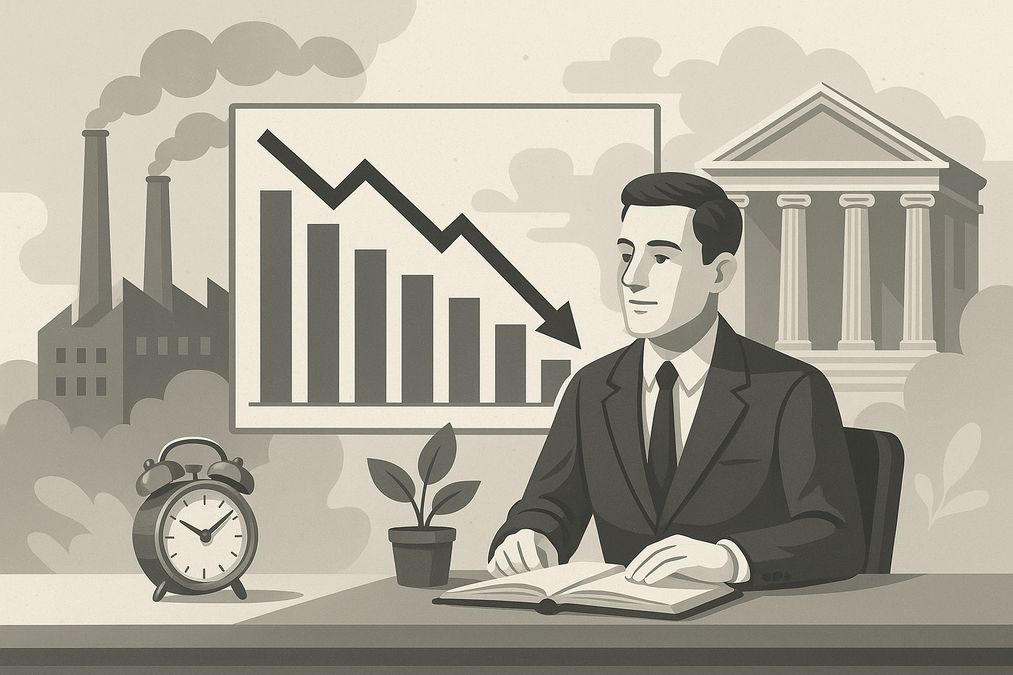
Toronto in 2026 is buzzing with energy. Newcomers are arriving with big ideas, side hustles are turning into real companies, and established small businesses are looking to grow again. Yet, the economic world still moves in cycles. Markets heat up, cool down, and shift. That’s why one of the most valuable playbooks for today’s entrepreneur comes from yesterday’s hardest lessons. If you’re starting or growing a business in Toronto, understanding what Great Depression teaches about business longevity can be a practical, stabilizing foundation for how you plan, build, and scale this year.
This guide translates historic resilience into simple, usable steps. You’ll learn the proven habits that kept companies alive during the toughest decade of the last century—and how to apply them to a 2026 Toronto reality shaped by digital commerce, changing consumer preferences, evolving regulations, and competitive urban markets. Whether you’re an unplanned entrepreneur, a newcomer to Canada, or a founder ready to level up, you’ll find concrete actions you can take in the next 90 days to increase staying power and long-term value.
We’ll cover financial cushions, customer-first strategy, smart pricing, operational discipline, and growth methods that work in both good times and bad. Along the way, you’ll find tips tailored to Toronto’s ecosystem—community partnerships, local grants and programs, and city-scale opportunities—so you can build a business that outlasts trends and thrives through change.
what Great Depression teaches about business longevity
The Great Depression exposed weaknesses and rewarded strength. Businesses that survived weren’t necessarily the biggest or the flashiest—they were the most adaptable, the most customer-focused, and the most disciplined about cash. Here are the core lessons, translated into plain language for Toronto founders in 2026.
1) Cash is oxygen—protect it and plan it
Companies survived by managing cash like their lives depended on it—because they did. Today, that means watching your burn rate, forecasting, and building a cushion. Cash flow is often the difference between weathering a slow quarter and shutting down. In 2026, with costs rising in everything from rent to inputs, rigor matters even more.
- Build a simple 13-week cash flow forecast. Update it weekly.
- Set a target reserve—aim for three to six months of operating expenses if possible.
- Collect receivables faster: clear invoices, early-payment incentives, deposits for custom work.
- Negotiate payables: longer terms, batch orders, or early-pay discounts if the math works.
2) Focus on must-have value, not nice-to-have features
In hard times, people buy essentials and proven ROI, not extras. Your offer should directly solve a painful problem or deliver a clear result. In 2026, the same logic applies: entrepreneurs who win are those who can articulate, in one sentence, why a customer is better off after buying.
- Define your core value proposition: what outcome do you deliver?
- Prove it with quick wins, small pilots, and measurable results.
- Eliminate features that don’t move the needle for your customer.
3) Operate lean—but don’t starve growth
Survivors in the 1930s cut waste while protecting productive assets. The modern version: automate repetitive tasks, negotiate smartly, and streamline processes, but keep investing in what fuels sales, retention, and brand strength.
- Trim non-essential spend; keep marketing that reliably turns $1 into more than $1.
- Standardize processes. Simple checklists reduce costly errors.
- Invest in customer experience—word-of-mouth is free yet powerful in a city like Toronto.
4) Diversify revenue and supply
One product line, one supplier, or one customer can sink a business if something changes. In 2026, build multiple pathways to revenue and resilience.
- Offer tiers: entry-level, core, and premium solutions.
- Add complementary services (installation, training, maintenance, advisory).
- Qualify backup suppliers and keep small test orders active.
5) Stay close to your customers and community
Successful companies in the Great Depression knew their customers personally. In Toronto, proximity matters. Speak to customers, walk the neighborhoods, attend local events, collaborate with community organizations, and respond quickly to shifting needs.
- Hold short customer interviews monthly to test assumptions.
- Host local workshops or pop-ups to increase visibility and trust.
- Create feedback loops: surveys, NPS, and open office hours.
6) Adapt early and often
Change was constant then, and it is now. The winners tested, learned, and pivoted before others. In 2026, that means iterative launches, fast feedback, and the courage to refine your business model when signals are clear.
- Ship small improvements weekly; measure results.
- Track leading indicators (demo requests, trial-to-paid conversion) rather than waiting on lagging ones (annual revenue).
- Be willing to narrow your niche if that’s where repeatable value exists.
Turn history into a 2026 Toronto playbook
It’s one thing to know the lessons, another to live them. Here’s how to translate the principles above into practical steps that fit Toronto’s cost structure, customer base, and competitive landscape in 2026.
Clarify your customer, problem, and promise
- Pick one primary customer segment in Toronto (e.g., condo property managers, dental clinics, boutique fitness studios, immigrant-led retailers, or fast-growing tech teams).
- Define the problem you solve in their words (fewer cancellations, more qualified leads, faster onboarding, less waste, or better compliance).
- Craft a simple promise: the outcome, the timeframe, and how you measure it.
Validate demand with low-risk experiments
- Run landing pages with clear offers; pre-sell or collect deposits for pilots.
- Use time-boxed trials (e.g., 30 days) to speed up learning.
- Ask for referrals from every successful pilot to grow revenue efficiently.
Design a lean, resilient cost base
- Start flexible: shared workspaces, month-to-month software, just-in-time inventory where feasible.
- Automate the boring: scheduling, invoicing, reminders, and basic reporting.
- Keep fixed costs low; trade fixed commitments for variable arrangements until revenue stabilizes.
Know your numbers cold
- Calculate unit economics: contribution margin per sale, customer acquisition cost (CAC), and customer lifetime value (LTV).
- Set pricing to protect margins; raise prices strategically when value grows.
- Forecast monthly and quarterly; conduct sensitivity tests for best/base/worst cases.
Build cash buffers and funding options early
- Automate savings to a reserve account whenever revenue lands.
- Maintain relationships with lenders and partners long before you need them.
- Line up alternative financing (purchase-order financing, prepayment plans, milestone billing) to match cash in with cash out.
Digitize your go-to-market
- Own your audience: email list, SMS consent, and a CRM to track deals and follow-ups.
- Publish authority-building content that answers real customer questions.
- Measure a short stack of metrics weekly: traffic to leads, leads to trials, trials to revenue, and retention.
Strengthen local roots
- Partner with nearby businesses for bundled offers or referral swaps.
- Engage with neighborhood BIAs, chambers, or industry meetups to stay visible.
- Offer community pricing for non-profits or early-stage partners to build goodwill and case studies.
Set simple operating rhythms
- Weekly: pipeline review, cash check-in, top 3 priorities.
- Monthly: P&L and cash flow review, pricing/tier experiments, customer interviews summary.
- Quarterly: strategy reset, product roadmap, capacity planning, and capital plan.
Start right: Toronto setup and compliance
Registering properly reduces risk and helps you open bank accounts, apply for programs, and sign leases with confidence. If you are at the early stage of formation in 2026, see the step-by-step overview in How to Register a Small Business in Toronto Ontario: 2026 Guide. Getting structure, name searches, licensing, HST, payroll accounts, and permits right the first time will save you time and prevent avoidable costs later.
Pricing and value: protect margin while creating fairness
Longevity depends on healthy margins. From the Great Depression to 2026, businesses that endure price based on value created—not just costs. In Toronto’s competitive markets, customers appreciate transparency and tangible outcomes.
- Anchor your price to results (time saved, revenue gained, risk reduced).
- Create good-better-best tiers to capture different budgets without discounting your core value.
- Use time-boxed promotions that create urgency without training customers to wait for sales.
- Review suppliers quarterly; negotiate based on your growing volume or switch where it’s smart.
Diversification that makes sense (not chaos)
Diversifying saved firms in the 1930s, but random diversification hurts focus. In 2026, diversify with intention: expand only where you have capability or clear customer pull.
- Add services that extend the customer journey (setup, optimization, training, maintenance).
- Bundle products to increase average order value while offering perceived savings.
- Develop a recurring revenue layer (subscriptions, service contracts, support retainers).
Marketing that compounds in Toronto
Marketing in 2026 is less about flashy campaigns and more about consistent proof of value. Combine digital assets with local presence.
- Create one anchor piece of content per month that answers a high-intent customer question.
- Repurpose it into snippets for email, social, and short videos.
- Show proof: case studies, reviews, before-and-after data, and testimonials.
- Run small, targeted ad tests; scale only when CAC stays healthy.
Sales that reduce risk for buyers
When budgets are tight, buyers fear making the wrong choice. Help them feel safe.
- Offer pilots, clear milestones, and opt-out clauses aligned with your economics.
- Use proposals that highlight outcomes, timelines, and responsibilities.
- Follow up consistently; most deals close after multiple touches.
People and culture for durability
Teams that survive downturns are engaged, cross-trained, and aligned around outcomes. Even a solo founder benefits from partners, contractors, and vendors who share the mission.
- Write short role scorecards: outcomes, competencies, and KPIs.
- Cross-train to avoid single points of failure.
- Hold brief weekly stand-ups focused on obstacles and commitments.
Risk management, the practical way
Resilience isn’t just optimism; it’s preparation. A few checklists can save a business.
- Supplier map: primary and backups, with contact details and terms.
- Customer concentration watchlist: flag when any single client exceeds 20% of revenue.
- Key-person risk: document processes and maintain accessible passwords and SOPs.
- Insurance review: ensure coverage fits current operations and assets.
For unplanned entrepreneurs: start small, start right
If you fell into entrepreneurship by necessity or opportunity, you are not alone. Many Toronto founders in 2026 begin unplanned but succeed by taking smart, steady steps. For a targeted starting point, explore Guides for Unplanned Entrepreneurs Starting a Business in 2026. You’ll find simple frameworks to validate ideas, test offers, and handle early logistics without unnecessary complexity.
- Start with a tiny, testable offer that solves one painful problem.
- Use pre-orders or pilot pricing to fund the first delivery.
- Keep overhead featherlight until revenue proves repeatable.
For newcomers to Canada: turn your experience into advantage
Newcomers enrich Toronto’s business scene with global insight, languages, and grit. If you’re new to the city or country, align your strengths with local needs and build a strong support system. See How Newcomers to Canada Can Start a Thriving Business in 2026 for a focused pathway on navigating setup, networks, and early growth.
- Map your previous industry skills to in-demand Toronto niches.
- Validate assumptions with quick customer chats in your neighborhood or online communities.
- Leverage multilingual marketing to reach under-served local audiences.
Tools, services, and support in the Toronto ecosystem
You don’t have to build alone. Toronto’s ecosystem in 2026 is rich with support. Consider these players and programs as you design your stack of tools and services:
- ABC of Business: Training, workshops, and practical information designed to help new entrepreneurs, small businesses, and startups create and grow. A strong partner for strategy basics, resilience planning, and execution roadmaps.
- Enterprise support organizations: Local small business advisory programs, group mentorship circles, and office hours that can pressure-test your plans.
- BDC-style financing and advisory: Explore options that match your stage and cash flow reality; balance debt with growth plans.
- Futurpreneur-style youth entrepreneurship support: If you’re within applicable age ranges, structured mentorship and funding can accelerate learning.
- Sector-focused accelerators and incubators: Join programs that align with your industry (tech, health, green, retail) to access mentors, peers, and capital networks.
- Professional services: Bookkeepers, accountants, and lawyers who understand small business realities and can set up clean systems from day one.
- Toronto Public Library and community hubs: Business workshops, market research databases, and quiet spaces to plan and build.
A 90-day resilience action plan for 2026
Use this simple, time-boxed plan to turn principles into momentum. Modify timelines to fit your schedule, but commit to finishing each stage.
Days 1–30: Proof of problem and offer
- Interview 15–20 potential customers; document exact words they use to describe their problem and desired outcomes.
- Draft a one-sentence value proposition and a three-tier pricing model.
- Launch a landing page with a clear, time-bound pilot offer; collect sign-ups or deposits.
- Create a basic 13-week cash flow model; set a target reserve and savings automation.
- Outline essential operations: delivery steps, tools, and responsibilities.
Days 31–60: Deliver, learn, refine
- Run 3–5 pilot projects with clear scopes and success metrics.
- Collect testimonials, measure outcomes, and turn wins into case studies.
- Tune pricing based on unit economics and customer feedback.
- Systematize delivery with checklists, templates, and automations.
- Negotiate supplier terms based on projected volume or reliability needs.
Days 61–90: Stabilize and scale responsibly
- Formalize recurring revenue (subscriptions, retainers, or maintenance plans).
- Build a repeatable customer acquisition loop: content, outreach, events, and referrals.
- Set up a weekly operating cadence and a monthly financial review ritual.
- Document key processes to reduce single-person dependency.
- Expand cautiously: add one new channel, product tier, or partnership only if it strengthens margins and retention.
Common mistakes to avoid in 2026
- Chasing growth without proof: Validate demand before scaling spend.
- Starving your future: Cutting all marketing or R&D undermines long-term survival.
- Ignoring unit economics: Revenue that loses money per sale is not progress.
- Over-customizing early: Standardize a core offer first; customize later for strategic clients.
- Single-point failure: Don’t rely on one supplier, one salesperson, or one channel.
Metrics that signal longevity
What gets measured gets managed. Pick a small set of indicators to guide decisions each week and month.
- Cash runway: months of expenses in reserve.
- Gross margin and contribution margin per unit.
- Lead conversion rate: visitor-to-lead, lead-to-opportunity, and opportunity-to-close.
- Payback period: how fast new customer revenue covers CAC.
- Retention and repeat purchase rate: the best sign you’re delivering real value.
- Customer concentration: percentage of revenue from your top client.
Real-world applications for Toronto sectors
Local services (home, health, beauty, repair)
- Offer maintenance plans and seasonal packages to create recurring revenue.
- Partner with condo boards and property managers for bundled discounts.
- Use reviews and photo proof to build trust fast.
Food and retail
- Test menu or product changes in small batches; scale what sells.
- Create subscription boxes or prepaid meal plans to smooth cash flow.
- Cross-promote with nearby shops and events to gain local foot traffic.
Consulting and creative services
- Productize services into clear packages with defined outcomes and timelines.
- Introduce retainers with monthly deliverables and scope limits.
- Automate scheduling, invoicing, and status updates to cut admin time.
Tech and digital products
- Ship small, frequent updates and track adoption by feature.
- Offer annual plans with benefits to improve cash predictability.
- Measure activation, engagement, and retention relentlessly.
Mindset matters: calm, consistent, customer-first
What Great Depression teaches about business longevity is as much about mindset as mechanics. The businesses that made it through were led by people who stayed calm under pressure, kept promises to customers, and improved a little each week. In 2026, you can set the same tone—steady, transparent, and focused on value.
- Think in systems: design routines that keep the business healthy, even when you’re busy.
- Tell the truth fast: with customers, partners, and your team; trust compounds.
- Celebrate small wins; they’re the building blocks of long-term strength.
Conclusion: Build something that lasts in Toronto, 2026
If you take only one idea from this guide, make it this: resilience is a set of repeatable behaviors. Protect cash, deliver must-have value, operate lean but not small-minded, diversify smartly, listen to customers, and adapt before you’re forced to. Those are the enduring lessons of past hardship, translated for the opportunities and realities of 2026 Toronto. Put them into practice over the next 90 days and you’ll give your startup or small business the best chance to endure and grow.
Want hands-on support to put these steps into action? Contact ABC of Business for training, workshops, and practical guidance tailored to Toronto founders. Start a conversation today at https://abcofbusiness.com/contact/.