
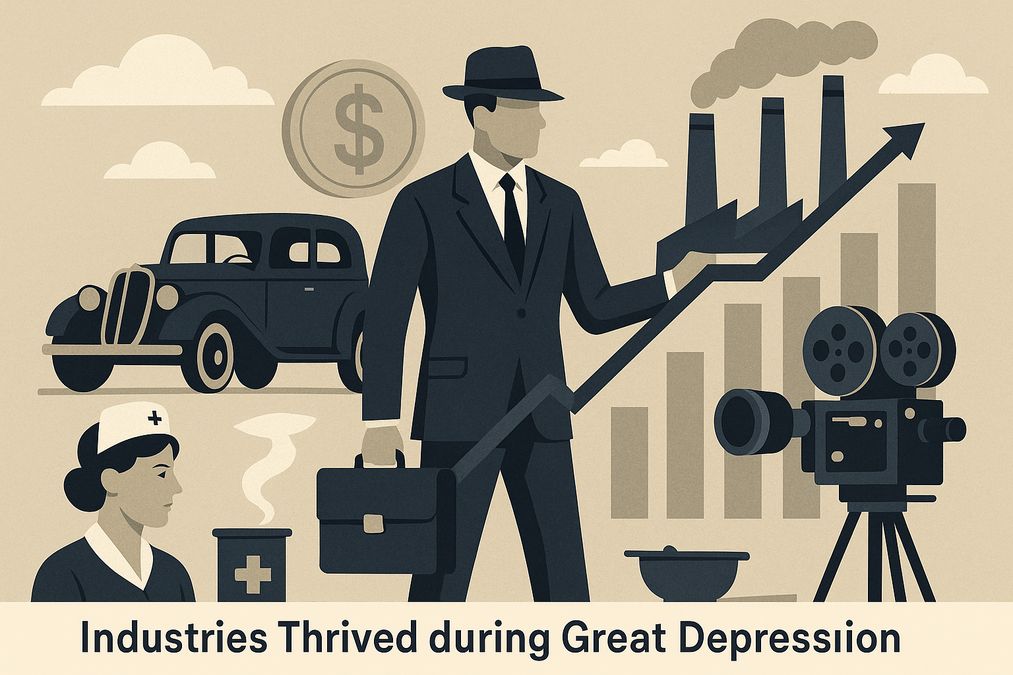
A 2026 Toronto guide to recession-resilient growth
If you’re starting or growing a business in Toronto in 2026, there’s a powerful way to build resilience: study the industries that thrived in Great Depression era and adapt their strengths to today. While technology, consumer habits, and regulations have shifted, the human needs behind spending decisions haven’t. Torontonians still seek value, reliability, and community. This guide translates historical resilience into practical, modern steps you can use in Scarborough, North York, Etobicoke, downtown, or across the GTA—whether you’re launching a side hustle, opening a storefront, or scaling a startup.
Below, you’ll learn which business models tended to hold up in hard times, why they worked, and how to deploy those lessons in 2026. You’ll also get a 90-day plan, Toronto-focused go-to-market ideas, and a toolkit to move faster with fewer missteps.
Why look back at 1930s markets now?
The Great Depression was a stress test for demand. Even with tight budgets, people still bought essentials, small comforts, and services that helped them save money or protect what they already owned. The winners weren’t always the biggest; they were the most relevant, efficient, and empathetic to customers’ realities. Their strategies—value pricing, durable products, repair services, lean operations, and local trust—still work today.
For a quick primer on how those strategies evolved, see Business resilience lessons from Great Depression. Then come back here to convert those ideas into a Toronto-ready action plan.
Industries that thrived in Great Depression era: key patterns
Historically resilient businesses shared a few traits. Use this checklist to evaluate your idea or to refine your current model:
- Essentials and repeat purchases: Groceries, household goods, hygiene products, basic apparel, and affordable healthcare continue regardless of the cycle.
- Repair, maintenance, and reuse: When people delay big purchases, they fix and extend the life of what they have.
- Small luxuries and escapism: Low-cost entertainment and cosmetics often hold steady—the “little treat” effect.
- Value formats: Discount retail, private labels, bundles, and subscriptions that stretch budgets.
- Trust and proximity: Local providers who listen, personalize, and deliver reliably.
- Productivity and savings for businesses: Tools and services that cut costs, grow revenue, or free up time.
Now, let’s translate those patterns into concrete Toronto opportunities you can launch or scale in 2026.
Toronto-ready sectors inspired by the 1930s
1) Essential food and household staples
Consumer staples were resilient in the Great Depression because they meet non-negotiable needs. In Toronto today, that translates to budget-friendly groceries, cultural staples (halal, kosher, South Asian, East Asian, Caribbean, African), baby products, cleaning supplies, and hygiene basics. The competitive edge comes from assortment, price integrity, and convenience.
Execution ideas for Toronto founders:
- Neighborhood micro-grocer: Compact stores with high-turn essentials, culturally relevant items, and private-label basics to control costs.
- Budget meal kits for families: Focus on $3–$5 per serving, weekly rotating recipes, and pre-portioned spices popular in local communities.
- Staples subscription: Monthly deliveries of rice, flour, oil, diapers, cleaning agents; built-in discounts for prepayment.
- Office pantry service: Simple, healthy snack-and-coffee packages to help small offices control costs while keeping teams happy.
Metrics to watch: inventory turns, shrinkage, average order value, subscription retention, and on-time delivery rates.
2) Repair, refurbish, and reuse
When budgets tighten, Torontonians choose to repair phones, laptops, appliances, bikes, and cars; they also alter clothes or buy refurbished items. The business case is strong: predictable demand, decent margins, recurring revenue via maintenance plans, and a sustainability story that resonates.
Execution ideas:
- Mobile device repair kiosks in transit-friendly hubs and pop-ups at campus events.
- Appliance tune-up subscriptions with priority service and annual safety checks for landlords and condos.
- Furniture upcycling studio with local pickup and resale marketplace tie-ins.
- Tailoring and shoe repair with rapid turnaround, SMS updates, and pickup/drop-off lockers.
Pricing tip: Offer a free diagnosis tier and “good / better / best” repair options with transparent warranties.
3) Low-cost entertainment and micro-escapes
Even during the Great Depression, low-cost entertainment found demand. In Toronto, the modern versions include neighborhood events, indie cinemas, gaming lounges, cafes with board games, comedy nights, cultural showcases, and family-friendly matinees.
Execution ideas:
- Pay-what-you-can weekday shows paired with affordable snacks.
- Membership passes that bundle a set number of visits, guest tickets, and small discounts on merchandise.
- Pop-up film or music nights in community centers and parks; local sponsors offset ticket prices.
Keep it inclusive: highlight family pricing, student deals, and community nights in multiple languages common in your area.
4) Affordable grooming and cosmetics
Small luxuries like cosmetics and grooming tended to persist historically, often called the “lipstick effect.” In Toronto, think efficient barbershops, budget-friendly salons, express services, refill stations for personal care, and basic skincare bundles.
Execution ideas:
- Express grooming bar: 20-minute cuts, quick facial grooming, and simple blowouts at clear, low prices.
- Refill station for soap, shampoo, conditioner, and deodorant—discount for bringing containers.
- Starter skincare kits with subscription refills and skin-type quizzes in English plus the key languages of your neighborhood.
Upsell with care plans rather than expensive single treatments; loyalty earns every fifth service free or discounted.
5) Education, training, and upskilling
In tough markets, people invest in skills that boost income or career resilience. Short, practical programs do well—especially those tied to in-demand roles or business growth.
Execution ideas:
- Micro-credentials: customer service excellence, sales fundamentals, bookkeeping, project coordination, AI-assisted productivity.
- Language-plus-career tracks (e.g., conversational English or French tailored to retail, hospitality, or tech support).
- Entrepreneur bootcamps for side hustlers: pricing, marketing, cash flow, and compliance basics.
Partnerships: community centers, faith-based venues, and libraries can extend your reach and reduce facility costs.
6) Health, wellness, and community care
Healthcare and basic wellness remain priorities. In Toronto, viable models include paramedical services (physio, chiro, massage), dental hygiene clinics, community mental wellness programs, and group fitness built around short, affordable sessions.
Execution ideas:
- Hybrid care: tele-consults for triage plus in-person visits for treatment; budget-friendly memberships.
- Group wellness programs addressing stress management and sleep hygiene; offer employer packages for small teams.
- Micro-gyms and class packs: 30-minute sessions, no long-term contracts, community accountability.
Focus on accessibility: sliding scales, clear pricing, and multilingual intake forms build trust and volume.
7) Home energy efficiency and utilities support
Utilities and energy-related services are historically steady. For Toronto homeowners, tenants, and landlords, services that reduce bills can thrive: weatherization, basic efficiency audits, smart thermostats, air sealing, and water-saving fixtures.
Execution ideas:
- Quick-start energy check: a low-cost visit with prioritized action list, ROI estimates, and referrals to vetted contractors.
- Landlord packages for small multiplexes: seasonal maintenance plans and unit-by-unit upgrade calendars.
- Tenant education kits: simple device bundles and guides to reduce electricity and water use.
Build credibility with before/after data, photos, and testimonials. Keep recommendations practical and cost-aware.
8) Logistics, local delivery, and last-mile services
Even in down cycles, people value convenience that saves time and money. Toronto’s dense neighborhoods open opportunities in last-mile delivery, returns management, micro-warehousing, and e-cargo bike routes that beat traffic and parking.
Execution ideas:
- Returns-as-a-service for small e-commerce brands; bundle pickup across multiple merchants for efficiency.
- Shared micro-fulfillment hubs for several local shops with same-day delivery zones.
- Subscription pickup windows for seniors or busy families (pharmacy, parcels, groceries).
To stand out, publish clear delivery windows, real-time tracking, and proactive delay alerts.
9) B2B savings software and services
Businesses pay for tools that cut costs, raise revenue, or reduce hassle. That was true in the 1930s for process innovations, and it’s true now for software and services.
Execution ideas:
- Lean bookkeeping and cash-flow coaching for small businesses; integrate with popular POS and invoicing platforms.
- No-code automation bundles that remove repetitive admin from retail, clinics, and trades.
- Procurement co-ops for shared bulk discounts on staples, packaging, or office supplies.
Proof wins trust: show before/after numbers, case studies, and quick pilots that deliver value in weeks, not months.
10) Community nonprofits and public partnerships
Public and nonprofit demand often persists and can be more predictable. In Toronto, opportunities include workforce programs, youth enrichment, senior services, cultural initiatives, and newcomer support—delivered by small vendors with strong impact and compliance.
Execution ideas:
- After-school enrichment delivered through community partners with clear outcomes and parent satisfaction metrics.
- Digital literacy and job search bootcamps for newcomers; employer connections are a plus.
- Wellness workshops that combine education with take-home kits funded by sponsors.
Master simple proposals, transparent pricing, and outcome reporting to build recurring relationships.
Pricing and offers that reflect real Toronto budgets
A common thread among industries that thrived in Great Depression era was value-driven pricing. In 2026, align your offers with how Torontonians actually budget and buy:
- Bundle essentials: Good/Better/Best packages that make the “middle” option the smart default.
- Subscriptions with pause options: Build loyalty without locking people into long commitments.
- Transparent price ladders: Itemize what customers get at each level to reduce choice anxiety.
- Family or household pricing: Multi-user access for services; multi-item savings for products.
- Community nights and off-peak deals: Fill lull periods while supporting neighbors who need a break on price.
Test prices in micro-pilots. Small sample sales, quick surveys, and A/B offers in different neighborhoods help you find the right balance between fairness and margins.
Cash flow, funding, and risk controls for 2026
Resilience is as much about cash discipline as it is about sales. Borrow a few playbook moves from historically resilient operators:
- 13-week cash flow forecast updated weekly; compare actuals to plan and act fast on gaps.
- Break-even math for each offer and channel so you know what to push, pause, or pivot.
- Inventory sanity: target turns, reorder points, and small-batch tests before big commits.
- Receivables and payables rhythm: early-pay incentives for customers; negotiate terms with suppliers.
- Contingency mini-fund: set aside a modest buffer for equipment fixes or quick pivots.
For an end-to-end crisis playbook aligned to today’s realities, see How Businesses Weather Financial Crises Effectively (2026). Apply one improvement per week; momentum compounds.
Go-to-market for Toronto neighborhoods
Toronto isn’t one market—it’s many micro-markets with different languages, incomes, and tastes. Approach growth block-by-block, not one-size-fits-all:
- Local search first: Complete your Google Business Profile, add accurate hours, use neighborhood keywords, and post weekly updates.
- Culturally fluent content: Offer materials in the top languages around your store or delivery zone; highlight community-relevant products.
- Partners, not just ads: Team up with schools, cultural centers, places of worship, and tenant associations.
- Transit-aware setup: Choose locations and delivery windows that match real commuting patterns.
Many founders in the wider region bring practical, frugal models that win in the city as well. For perspective on cross-regional strengths, read Why Rural Small Business Owners Succeed in Toronto in 2026.
Marketing that earns trust without overspending
During hard times, people scrutinize claims and stick with providers who keep promises. Build a marketing engine centered on proof and community:
- Proof library: Before/after photos, short video testimonials, and simple case studies.
- Operational transparency: Publish service levels (on-time rates, repair turnaround), especially if they’re improving.
- Educational content: Practical tips that help people save money or get more from what they already own. It positions you as a helpful neighbor.
- Referral flywheel: Give rewards that feel like a thank-you, not a bribe—store credit, free add-ons, or community donations.
SEO note: Build topic clusters around timeless needs. A hub page can explain how industries that thrived in Great Depression era inform modern choices; satellite posts can go deep on repairs, savings, and budget-friendly bundles relevant to Toronto residents.
Tools and partners to accelerate execution
When assembling your stack, prioritize simplicity, cost control, and support. Consider these players in the Toronto entrepreneurial ecosystem:
- ABC of Business: Training, workshops, and practical information for new entrepreneurs, small businesses, and startups—tools you can use right away to become more successful in the game of business.
- Shopify: Canadian e-commerce backbone with easy POS integrations for hybrid retail.
- Square or Stripe: Simple payments, invoicing, and subscription billing.
- Wave or QuickBooks: Accounting, invoicing, and basic cash-flow views; connect your bank for real-time tracking.
- HubSpot or Mailchimp: Lightweight CRM and email automations with free tiers.
- Canva: Affordable design for signs, menus, promos, and social content.
- Trello, Notion, or Asana: Keep tasks, SOPs, and checklists organized for small teams.
- Toronto Public Library resources: Business research databases, market reports, and workshops accessible with a library card.
- MaRS Discovery District and local incubators: Community, mentorship, and programming for growth-focused founders.
Pick the minimum viable stack and add only when a new tool clearly pays for itself.
Your 90-day plan to launch or strengthen a resilient business
Days 1–30: Validate and clarify
- Interview 15–20 target customers across two neighborhoods; ask how they currently solve the problem and what they pay.
- Run a pop-up, pilot, or pre-order to test real demand and price sensitivity.
- Map a basic unit economics model: cost of goods or service time, price, gross margin, and break-even volume.
- Draft your first 13-week cash flow and tighten expenses to protect your runway.
Days 31–60: Build and sell
- Finalize a Good/Better/Best offer with clear inclusions and a simple guarantee.
- Set up local SEO, basic website, and two social channels where your buyers are active.
- Form 3–5 community partnerships for distribution, events, or bundled offers.
- Start a proof engine: collect testimonials, run before/after pilots, and publish quick wins.
Days 61–90: Systematize and scale
- Document standard operating procedures for the top 5 recurring tasks; train a backup.
- Negotiate supplier terms; explore co-ops or bulk buys with nearby businesses.
- Launch a referral program with authentic rewards and monthly recognition.
- Review your cash flow weekly; double down on what’s profitable and pause low-return experiments.
Common pitfalls to avoid
- Complex offers that confuse buyers—keep tiers clear and names simple.
- Overbuying inventory or equipment before you have proof of demand.
- Ignoring unit economics in favor of “growth at all costs.” Resilience comes from healthy margins.
- Underestimating local differences—what sells in one neighborhood may need adjustments in another.
- Marketing claims without proof—collect and show evidence early and often.
Metrics that matter
- Sales: revenue by product, channel, and neighborhood.
- Profit: gross margin per SKU/service and contribution margin after variable costs.
- Demand quality: repeat rate, subscription retention, and referral share.
- Operational reliability: on-time delivery/turnaround and first-time fix rates.
- Cash health: runway months, receivables days, and inventory turns.
FAQ: applying lessons from industries that thrived in Great Depression era
Which sectors from the 1930s are most relevant to Toronto now?
Consumer staples, repair and maintenance, low-cost entertainment, affordable grooming, basic healthcare, education/upskilling, energy-efficiency services, last-mile logistics, and B2B savings tools align well with how Torontonians spend in 2026.
How do I avoid feeling “cheap” while offering value?
Lead with quality at each price tier, publish clear inclusions, and back it with a fair guarantee. Value isn’t about cutting corners; it’s about solving the core job at a fair price.
What’s the fastest way to validate demand?
Offer a time-bound pilot to a tightly defined segment, collect pre-orders or deposits, and set a specific success metric (e.g., 30 paying customers in 14 days). Adjust quickly based on feedback.
How do I market without a big budget?
Own local search, partner with community organizations, and build a small proof library. Encourage referrals with authentic, useful rewards like store credit or free add-ons.
Can a premium brand thrive in a value-focused market?
Yes—if it delivers a clear, defensible benefit (durability, expertise, time savings) and proves it. Some customers trade up to products that last longer or services that remove stress.
Bringing it all together
The clearest message from industries that thrived in Great Depression era is that resilience grows from relevance. In Toronto, relevance means meeting essential needs with dignity, saving people time and money, and delivering a dependable experience that neighbors recommend to neighbors. Whether you sell staples, repair services, wellness programs, affordable entertainment, or B2B efficiency tools, the winning formula is consistent: listen closely, price fairly, prove outcomes, and run a tight cash engine.
If you want help turning these ideas into a focused plan for your business, training your team, or pressure-testing your numbers, reach out to a local partner that understands the grind and the opportunity. Ready to take the next step? Contact ABC of Business at https://abcofbusiness.com/contact/.