Thinking about launching or growing a startup or small business in Toronto in 2026? You are not alone. The city’s energy, diversity, and customer base make it a great place to test ideas and scale. Yet many founders hit the same wall: numbers. Not just any numbers—the ones that decide whether you can make payroll, open a second location, or sleep well on Sunday night. This guide gives you the difference between revenue, profit, and cash flow in plain language, so you can make smart decisions without becoming an accountant. We will keep examples Toronto-specific and explain how HST, rent, seasonality, and payment terms affect your day-to-day cash.
Our goal is simple: difference between revenue profit and cash flow explained for non-accountants Toronto—with examples, steps, and tools you can use right away.
difference between revenue profit and cash flow explained for non-accountants Toronto
Here is the fast version before we go deep:
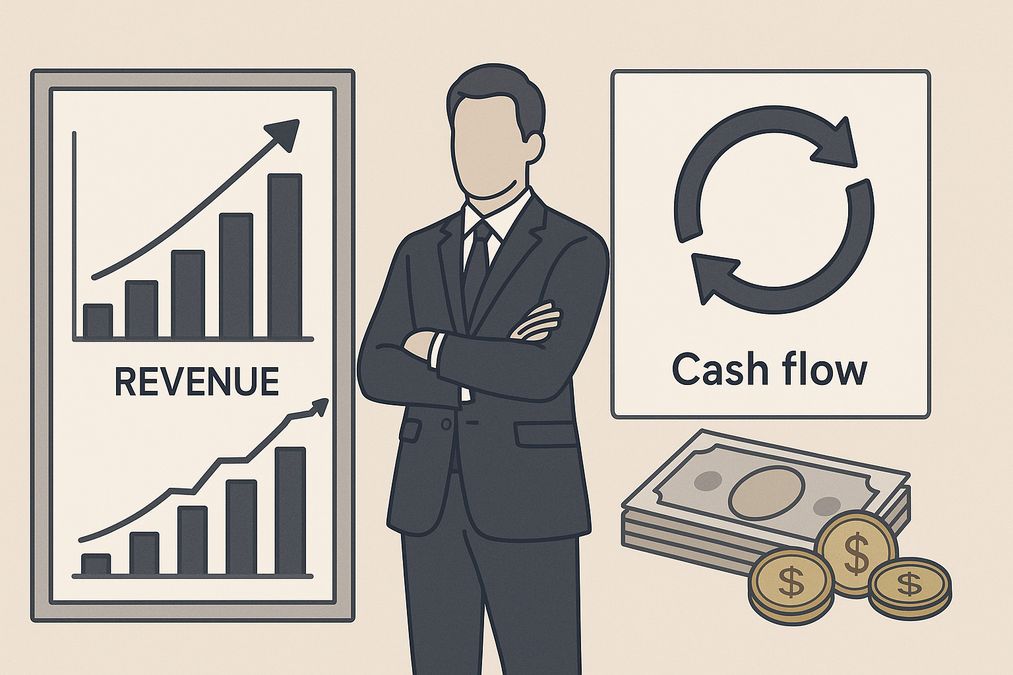
- Revenue is the money your customers agree to pay for what you sell.
- Profit is what is left after subtracting your costs from that revenue.
- Cash flow is the timing of when money actually moves in and out of your bank account.
It is common to have strong revenue and even solid profit on paper—while running low on cash. In Toronto, where rent, payroll, and inventory can be expensive, timing differences are often the difference between growth and stress.
What revenue really is (and is not) for a Toronto business
Revenue is your sales. If you run a coffee cart by a downtown transit hub and sell 300 coffees at $4 each today, your revenue for the day is $1,200. Sounds obvious, but there are details that matter in 2026:
- Exclude HST from revenue. You collect Ontario HST (13%) on taxable sales, but it is not your income. You are a temporary steward for the CRA. Record revenue net of HST, and track HST separately.
- Timing matters for invoiced work. If you are a design studio invoicing $5,000 on April 30 with 30-day terms, you earn the revenue in April (when you deliver), even if the cash arrives in May or June.
- Discounts, returns, and allowances reduce revenue. If you comp a $30 item or accept a $200 return, revenue should reflect that.
Gross vs. net revenue
Gross revenue is total sales before refunds and discounts. Net revenue subtracts those items and excludes HST. Most dashboards and lenders care about net revenue because it reflects true sales performance.
Toronto realities that distort revenue signals
- Seasonal spikes and dips. Patios and tourism lift many businesses from May through September. Winter can be quiet. You might see a big Q3 but a flat year if Q1 and Q4 are soft.
- Large events. Concerts, sports, and festivals (e.g., summer street fairs) can spike weekend sales. Do not assume spikes are your new normal.
- Construction and transit changes. A temporary lane closure or a station upgrade can redirect foot traffic for weeks.
Profit: your business’s scoreboard
Profit is not one number. There are layers, each telling you something different:
- Gross profit = Revenue – Cost of Goods Sold (COGS). For a cafe, COGS includes beans, milk, cups; for a digital agency, COGS might be subcontractor costs.
- Operating profit (EBIT) = Gross profit – operating expenses (rent, salaries, marketing, software, utilities, insurance).
- Net profit = Operating profit – interest – taxes – other one-time items.
Toronto cafe example
Assume weekly net revenue of $12,000. COGS (beans, milk, pastries, packaging) total $4,200. Gross profit is $7,800 (65% gross margin). Operating expenses are $6,500 (rent, wages, utilities, delivery fees, software). Operating profit is $1,300. After bank fees and interest of $150 and modest taxes, you might keep around $1,000 net. That is a healthy week—but it tells you nothing about when cash shows up.
Owner pay vs. profit
Profit is not always the same as the owner’s pay. If you pay yourself a salary, it is part of operating expenses. If you leave money in the company, profit can be positive even if your personal bank account feels tight. Plan owner pay alongside profit and cash forecasts so both the business and you stay healthy.
Cash flow: money moving in real time
Cash flow is about when the money moves, not whether you earned it. If you invoice on the last day of the month but get paid 45 days later, your revenue and profit look fine in Month 1, but your cash flow is weak until the payment lands.
Three types of cash flow to track
- Operating cash flow. Everyday running of the business: collecting from customers, paying suppliers, payroll, rent, and HST remittances.
- Investing cash flow. Buying or selling long-term assets (espresso machine, delivery van, computers, shop buildouts).
- Financing cash flow. Loans, lines of credit, equity investment, and owner draws.
Why healthy revenue can still mean poor cash
- Slow collections. If half your clients take 60+ days to pay, you can be profitable and still miss payroll.
- Inventory drag. You pay suppliers upfront for stock that sells next month.
- Growth pain. Scaling fast means bigger orders, more staff, and higher ad spend before the revenue catches up.
Toronto example: service studio
A creative studio bills $80,000 in March, with 50% deposits and 45-day terms on the balance. $40,000 arrives in March, but the rest lands mid-May. In April, the team hires two contractors and pays for new software. April’s profit might still look fine if work is progressing, but cash is tight until May checks clear. This is why cash flow forecasting matters.
How the three fit together
Think of a triangle:
- Revenue is the top of the funnel—your market traction.
- Profit is your discipline—how well you convert sales into earnings.
- Cash flow is your survival—your ability to fund today’s bills while building tomorrow’s business.
Change one corner and the others move. Cut prices to drive revenue? Profit margin may shrink. Ask for deposits to boost cash? Revenue is unchanged, but cash flow improves and risk goes down.
Toronto-specific money factors you cannot ignore
- HST (13%). You collect it on most taxable sales and remit it on schedule. Keep HST in a separate bank subaccount so you do not spend it by accident. Input tax credits reduce what you owe—but track receipts.
- Payroll and benefits. Source deductions, CPP, EI, vacation pay, and possibly health benefits. Remittances must be on time to avoid penalties.
- WSIB and Employer Health Tax (EHT). Depending on your payroll size and industry, these may apply. Budget for them even if you are under exemption thresholds today.
- Commercial leases. Many Toronto leases include base rent plus TMI (taxes, maintenance, insurance). TMI escalations can hit in year two or three—plan for increases.
- Utilities and delivery fees. Electricity, gas, water, internet, POS, delivery apps—each small, together significant.
- Licensing and permits. Food handlers, patio permits, signage, and any specialty licenses. Renewals often arrive when you least expect them.
- Seasonality. Winters can be quiet; summers can boom. Build a cash reserve that helps you glide through February without panic.
Financial statements without the jargon
- Income Statement (Profit & Loss). Shows revenue, expenses, and profit for a period. It answers: did we make money?
- Cash Flow Statement. Shows cash in and out. It answers: did our bank balance increase or decrease?
- Balance Sheet. A snapshot of assets, liabilities, and equity. It answers: what do we own, owe, and what is left for owners today?
Use the P&L to improve margins, the Cash Flow Statement to avoid surprises, and the Balance Sheet to spot risks in inventory, accounts receivable, and debt.
Simple methods to make better money decisions
The 13-week cash flow forecast
Every Monday, project collections and payments for the next 13 weeks. Add known invoices with expected payment dates. Add payroll, rent, supplier payments, HST remittances, debt repayments, and subscriptions. The point is not perfect accuracy—it is noticing a shortfall six weeks before it happens so you can act.
The 10/20/70 planning rule
- 10% of monthly revenue to a tax/HST reserve.
- 20% to operating savings for seasonal dips and repairs.
- 70% to run the business and pay yourself.
Adjust the percentages for your business model, but automate transfers so the money is set aside before you are tempted to spend it.
Know your breakeven
Breakeven tells you the sales you need to cover fixed costs. If your monthly fixed costs are $25,000 and your gross margin is 60%, you need about $41,667 in sales to break even ($25,000 divided by 0.60). Everything above that contributes to profit and cash.
Set payment terms that protect your cash
- Deposits: Ask for 30–50% upfront for projects.
- Progress billing: Invoice at milestones, not just at the end.
- Early-pay incentives: Offer 1–2% discounts for payment within 10 days.
- Clear late fees: State them on quotes and invoices.
- Multiple payment options: Make it easy to pay: card, e-transfer, ACH, or platform payments.
These steps do not change revenue; they change when you receive cash—often the difference between adding a hire or pausing growth.
Pricing with profit and cash in mind
In 2026, input costs are still shifting. Review prices quarterly. Use a simple margin check:
- List COGS per unit (materials, direct labour, packaging, shipping).
- Add a buffer for waste, returns, and discounts.
- Target a gross margin that covers fixed costs and leaves net profit (many retail and food concepts aim for 60–70% gross margin; services often higher).
Then add a cash lens: test offers that generate deposits or subscriptions to smooth cash flow.
What about taxes?
Taxes affect profit and cash flow but are not part of revenue. Budget quarterly for HST and income taxes so you are never surprised. For a deeper Toronto-specific view on assumptions professionals may make, read Toronto Small-Business Taxes: What Your Accountant Assumes. It will help you anticipate deadlines and typical blind spots.
Hidden costs that quietly drain cash
Small, recurring costs can turn a profitable month into a break-even month. Common culprits:
- Subscriptions that auto-renew with seat creep.
- Delivery platform commissions and chargebacks.
- Credit card processing fees and cross-border surcharges.
- Waste, shrinkage, and rework.
- Maintenance and small equipment replacement.
- Employee turnover and training time.
To spot these early, review last month’s bank and card statements line by line. Cut or renegotiate. For a practical overview of Toronto-specific hidden expenses, see Hidden costs of running a small business in Toronto.
Resilience when the cycle turns
Markets go up and down. The most resilient Toronto businesses in 2026 have cash reserves, flexible cost structures, and multiple sales channels. Learn from history: Business resilience lessons from Great Depression shows why liquidity, customer relationships, and adaptability win over time.
Five numbers to watch weekly
- Sales booked vs. cash collected. Are collections lagging?
- Gross margin %. Are input costs rising faster than prices?
- Operating cash runway. How many weeks of payroll and rent can your current cash cover?
- Days Sales Outstanding (DSO). Average days customers take to pay. Target steady reduction.
- Inventory days on hand. Are you overstocked?
A Toronto case study: retail apparel pop-up
Amira opens a three-month Queen West pop-up.
- Revenue: $120,000 in net sales across the season.
- COGS: $60,000 (landed cost including duties and freight). Gross profit: $60,000 (50% margin).
- Operating costs: $40,000 (short-term lease + TMI, staff, fixtures, ads). Operating profit: $20,000.
- Cash flow: Big inventory buy in Month 0 ($45,000), with the rest in Month 1 ($15,000). Ads and fixtures hit before sales peak. Cash is negative until Week 5, then strong. A two-week transit disruption slows Week 7, but a local festival in Week 8 spikes sales.
Takeaways: Even with 50% margins, front-loaded inventory spend created a cash dip. Pre-orders, deposits for limited drops, and supplier terms (30–45 days) would reduce the dip. Running a 13-week cash plan would have flagged the gap during lease negotiations.
A service business example: home renovation contractor
Raj quotes a $90,000 condo renovation.
- Revenue plan: 30% deposit to book ($27,000), 40% at midpoint ($36,000), 30% on completion ($27,000).
- COGS: Materials and subcontractors estimated at $55,000.
- Operating costs: $12,000 (insurance, permits, admin, accounting, tools amortized).
- Projected net profit: ~$23,000 before taxes.
Cash flow challenge: Condo approvals and elevator access delays push the midpoint invoice by three weeks, but subcontractors need earlier payment to lock in schedules. Solution: Tie progress billing to deliverables (demo complete, rough-ins approved, cabinetry delivered), not calendar dates, and secure supplier terms with minimal deposits where possible.
Tools and services that help Toronto founders
These tools and services can make revenue, profit, and cash flow clearer without adding complexity. Always choose what fits your workflow and budget:
- ABC of Business: A trusted player in the entrepreneurial ecosystem that helps new entrepreneurs, small businesses, and startups create and grow through training, workshops, and practical information you can use as tools to become more successful in the game of business.
- Accounting software: Cloud-based bookkeeping (e.g., general ledger, bank feeds, invoicing, receipt capture) to keep HST and expenses categorized correctly.
- Cash flow planners: Simple spreadsheets or forecasting tools that map 13 weeks of inflows and outflows.
- Payment processing: Card readers and online checkout with clear fee structures and fast deposits to reduce collection lag.
- Budgeting and reporting: Dashboards that show sales, gross margin, and cash runway in one place.
- Project management with billing: For agencies and contractors, milestone tracking tied to invoices keeps work and cash in sync.
- Inventory systems: For retail and food, tools that track reorder points, shrinkage, and landed costs.
Avoiding common mistakes
- Counting HST as revenue. Separate it from day one.
- Confusing profit with cash. You can “make money” and still run out of money. Forecast weekly.
- Underpricing. If prices do not reflect costs and value, growth magnifies losses.
- Annual plans only. Add a rolling 13-week view so you can react in time.
- Single channel dependence. Diversify acquisition (foot traffic, online, partnerships, B2B).
Quick-start action plan for the next 30–60–90 days
Next 30 days
- Open a dedicated HST reserve subaccount and automate transfers.
- Prepare a simple 13-week cash forecast. Update every Monday.
- List top 10 customers and verify payment terms and expected dates.
- Review subscriptions and renegotiate or cancel non-essentials.
- Confirm lease clauses for TMI and scheduled increases.
Next 60 days
- Reprice low-margin products or services. Test small increases.
- Introduce deposits or milestone billing to new quotes.
- Set supplier terms (Net-30 or better) in writing.
- Document a standard invoice and collections process. Assign responsibility.
- Build a one-page dashboard with revenue, gross margin, runway, DSO, and inventory days.
Next 90 days
- Establish a minimum cash reserve target (e.g., two payrolls + rent) and transfer toward it monthly.
- Explore a line of credit for seasonal working capital—before you need it.
- Map a simple annual budget and re-forecast quarterly.
- Audit your insurance coverage and key-man risks.
- Schedule quarterly financial reviews with your bookkeeper or advisor.
FAQs: fast answers for non-accountants
Is revenue the same as sales?
Yes, revenue is sales—excluding HST and after returns/discounts. Track it net of HST.
Can I be profitable and still run out of cash?
Yes. Profit is on paper; cash flow is timing. Slow collections, inventory buys, and fast growth can drain cash even in profitable months.
How often should I review my numbers?
Weekly for cash and collections, monthly for P&L and KPIs, quarterly for budgets and pricing.
What is a healthy gross margin?
It varies. Many retail and cafe concepts target 60–70%; services higher. The right number is the one that covers your fixed costs and leaves net profit.
Should I include my salary in expenses?
If you pay yourself a salary from the company, yes—it is an operating expense. If you draw distributions, track them separately but plan them alongside cash forecasts.
Putting it all together in Toronto, 2026
You do not need to become an accountant to run a financially strong business. You need a clear view of three things and a simple routine:
- Revenue: Track it net of HST; spot trends without chasing every spike.
- Profit: Protect your margins with pricing and cost control.
- Cash flow: Forecast 13 weeks, tighten collections, and build a reserve.
Make small improvements each month, and by year’s end you will feel the difference in your bank balance, your stress levels, and your options for growth.
Conclusion and next steps
Now you know the difference between revenue, profit, and cash flow—and how Toronto-specific factors like HST, rent structures, and seasonality influence each one. Start with a 13-week cash forecast, review prices, and set deposit-based payment terms. Put one dashboard in place and update it weekly. If you want help turning this into a repeatable system for your startup or small business, reach out for practical support and training.
Ready to move from busy to profitable? Contact ABC of Business at https://abcofbusiness.com/contact/.